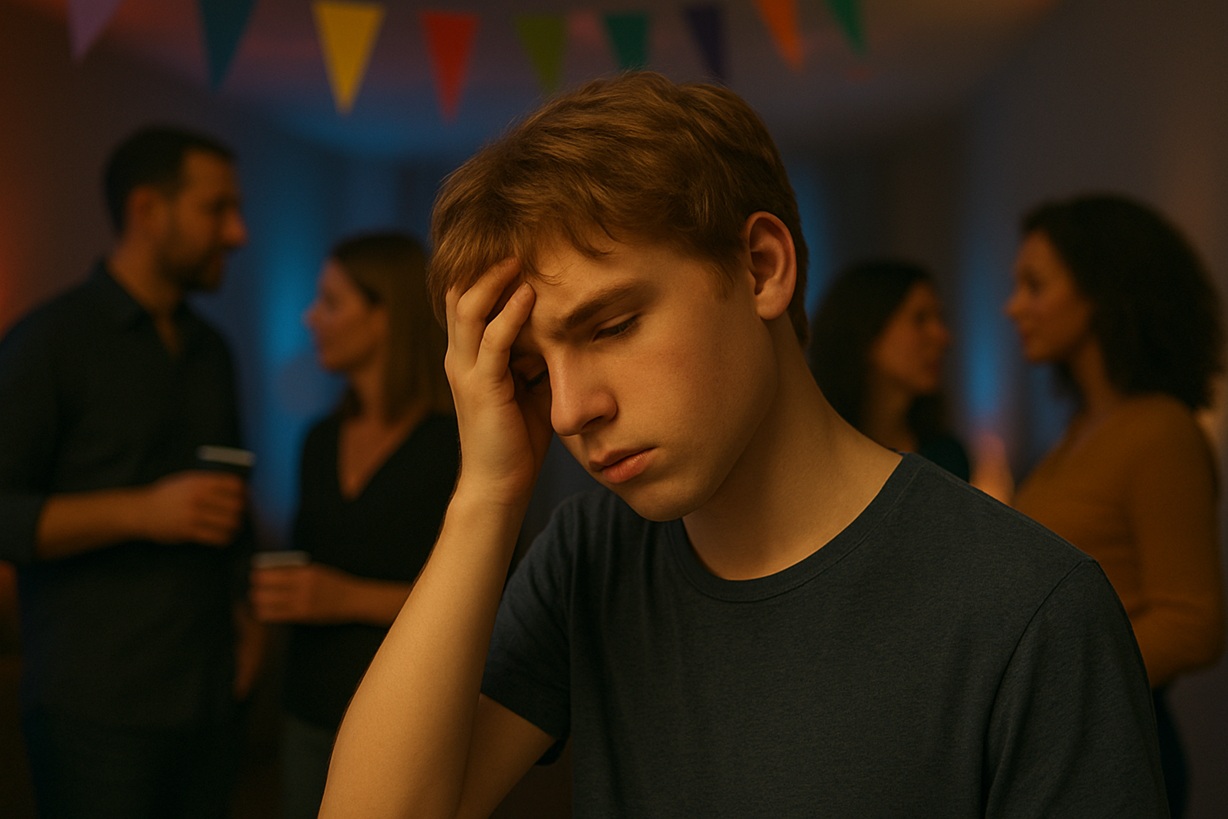
Teenage drinking at home: are you under the impression that, within reason, it’s a good thing?
My parents thought so. They believed that letting us sip good liquor would teach us to enjoy alcohol in moderation. Better to think of it as something tasty, they said, than to guzzle it just to get drunk.
Not that my parents were drinkers. They weren’t. I don’t think their friends were either, aside from one woman they murmured about in low voices, punctuated by the occasional tsk.
Still, they prided themselves on being good and generous hosts. So when there was a party, they’d unlock the liquor cabinet. Out slid the four-tiered, built-in bar. It was well-lit and loaded with every type of glass, swizzle stick, and soda dispenser a tippler could want.
A Modest Portion
There was no single malt scotch snobbery back then. Chivas Regal sat at the top of the heap. So did Bristol Cream Sherry, which was elegant and therefore suited to the ladies.
Our liquor cabinet held both. But also stranger things, like a tall bottle of yellow Galliano and a Swiss chocolate liqueur with cocoa nibs. We drank that one in small aperitif glasses.
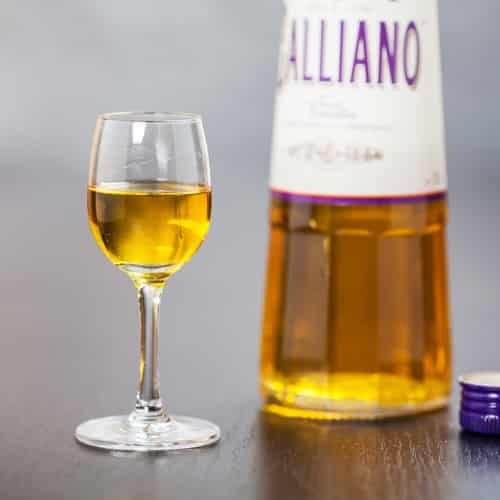
During parties, my siblings and I got to choose a drink and have a modest portion. The cabinet had a lock, but we knew where to find the key. That’s where we kept our TV snacks too.
It was understood that we wouldn’t abuse the privilege. And we didn’t.
Well—except just this one time.
It happened like this:
Childhood Memory
I was 11. My sister Jillian was 14 and meant to be watching me.
She decided my cultural education was lacking. I had never tasted a Harvey Wallbanger. So she mixed up two tall glasses—vodka, Galliano, and orange juice. The next thing I remember is waking up on the floor, by having my left index finger impaled by the spikes of my mother’s golf shoes. My sister had also decided it was a necessary skill for her to learn how to walk in golf shoes, indoors, on my mother’s new linoleum flooring. And since I was so rudely unaware of the importance of her learning experience, she decided to pretend I was simply part of the floor.
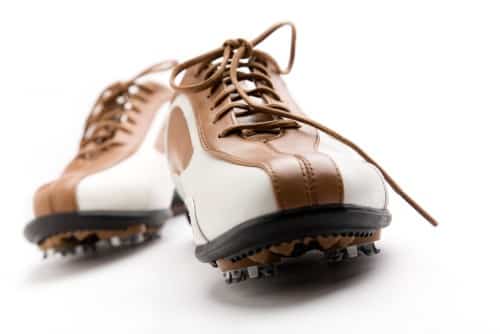
I have the scar on my finger to this day.
Interestingly enough, my mother came home right at that moment and found me crying and bleeding on the floor. Naturally, I wanted to lay the blame on my sister who was, after all, supposed to be taking care of me. “Jill made me drink Harvey Wallbangers and walked on my hand in your golf shoes,” I sobbed.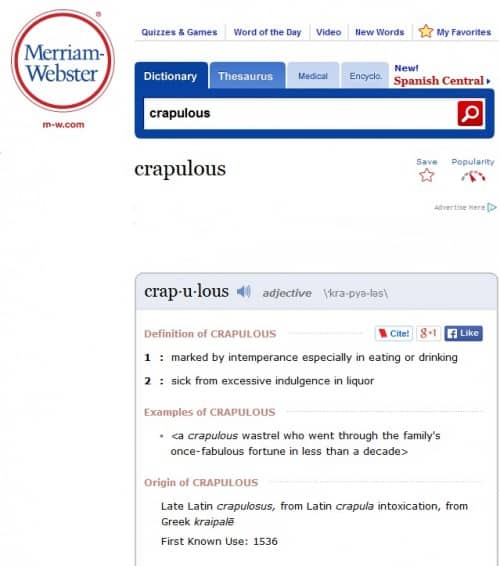
My sister did get in trouble with our mom, but not in as much trouble as one might have imagined. It was deemed that we had learned our lesson about drinking and could now be trusted to never become crapulous again.
Undeniable Enjoyment
Now I won’t say that we never got tipsy after that, but we certainly did not get plastered at home, and certainly did not get wasted again until we were grown-ups. We enjoyed the taste of liquor and yes, the pleasant glow of having a buzz on. I won’t deny this is true.
I kept these factors in mind as I tried to formulate a policy for how I would handle the subject of alcohol with my own children. On the one hand, genetics were on my side. I didn’t come from drinkers, nor did my husband. So that eliminated one risk factor for my children developing into alcoholics. That was a good thing.
On the other hand, I wondered about the parenting theory my parents subscribed to: allowing children to drink in moderation in the home. Did allowing moderate drinking at home foster “a healthy attitude about alcohol?” And what does that mean, anyway, a healthy attitude about alcohol? Is there such a thing?
I looked into the issue and found that there is a preponderance of evidence against the practice of allowing children to drink in moderation in the home under supervision.
Studies On Teenage Drinking At Home
For example, one study of children in the 6th, 7th, and 8th grades whose parents let them drink at home had the steepest rise in drinking compared to their peers. See: Komro, K.A.; Maldonado-Molina, M.M.; Tobler, A.L.; et al. Effects of home access and availability of alcohol on young adolescents’ alcohol use. Addiction 102(10):1597–1608, 2007.
A second study found that teens allowed to drink at home will drink more than their peers when outside the home. See: van der Vorst; H., Engels, R.C.M.E; and Burk, W.J. Do parents and best friends Influence the normative increase in adolescents’ alcohol use at home and outside the home? Journal of Studies on Alcohol and Drugs 71(1):105–114, 2010.
A further study, showed that teens will drink less outside the home than if their parents forbid drinking from an early age and take care not to overindulge in drink themselves. See: van der Vorst, H.; Engels, R.C.M.E; Meeus, W; and Dekovic, M. The impact of alcohol-specific rules, parental norms about early drinking and parental alcohol use on adolescents’ drinking behavior. Journal of Child Psychology and Psychiatry 47(12):1299–1306, 2006.
Lower Drinking Risk?
I came across only a single study that suggested that teens who are allowed a sip of an alcoholic drink at a family gathering may be less at risk for later heavy drinking. See: Foley, K.L.; Altman, D.; Durant, R.H.; and Wolfson, M. Adults’ approval and adolescents’ alcohol use. Journal of Adolescent Health 35(4):7–26, 2004.
Taken as a whole, the literature on the subject of allowing teens to drink at home is persuasive: teenage drinking at home is something that is best forbidden by a teen’s parents. My mom and dad did a good job raising me. But the evidence suggests that my kids might not be as lucky as my siblings and I were in relation to drinking habits. The key to the liquor cabinet is therefore going into hiding in a place my teens will never think to look.
Locking up the liquor seems a small price to pay if it helps them stay sober as adults.
 About Varda Epstein
Varda Meyers Epstein serves as editor in chief of Kars4Kids Parenting. A native of Pittsburgh, Pennsylvania, Varda is the mother of 12 children and is also a grandmother of 12. Her work has been published in The Washington Post, The Huffington Post, The Learning Site, The eLearning Site, and Internet4Classrooms.