

Kids are cheating with AI to do their schoolwork, an undeniable fact. Parents would like to think their child would never cheat with or without AI. But the data has always told a different story. A survey of 700,000 high school students conducted between 2002 and 2015 found that 95% admitted to some form of cheating—whether on homework or tests. And that was before AI tools like ChatGPT, Google Gemini, Claude, or Copilot became something every kid with a phone could access in seconds.
Today, the landscape looks very different. Recent data from 2026 shows that 58% of students say they use AI as a tutor rather than a shortcut—looking up concepts, checking their understanding, getting explanations. That’s genuinely useful. Another 48% use AI for research, and 38% use it to brainstorm ideas for papers.
But here’s the other side of those numbers: 51% of students know that using ChatGPT to complete assignments is cheating. Yet 22% of them admit to cheating with AI anyway. That’s nearly one in four kids, fully aware they’re crossing a line, and crossing it nonetheless.

Why AI Cheating Hurts Critical Thinking
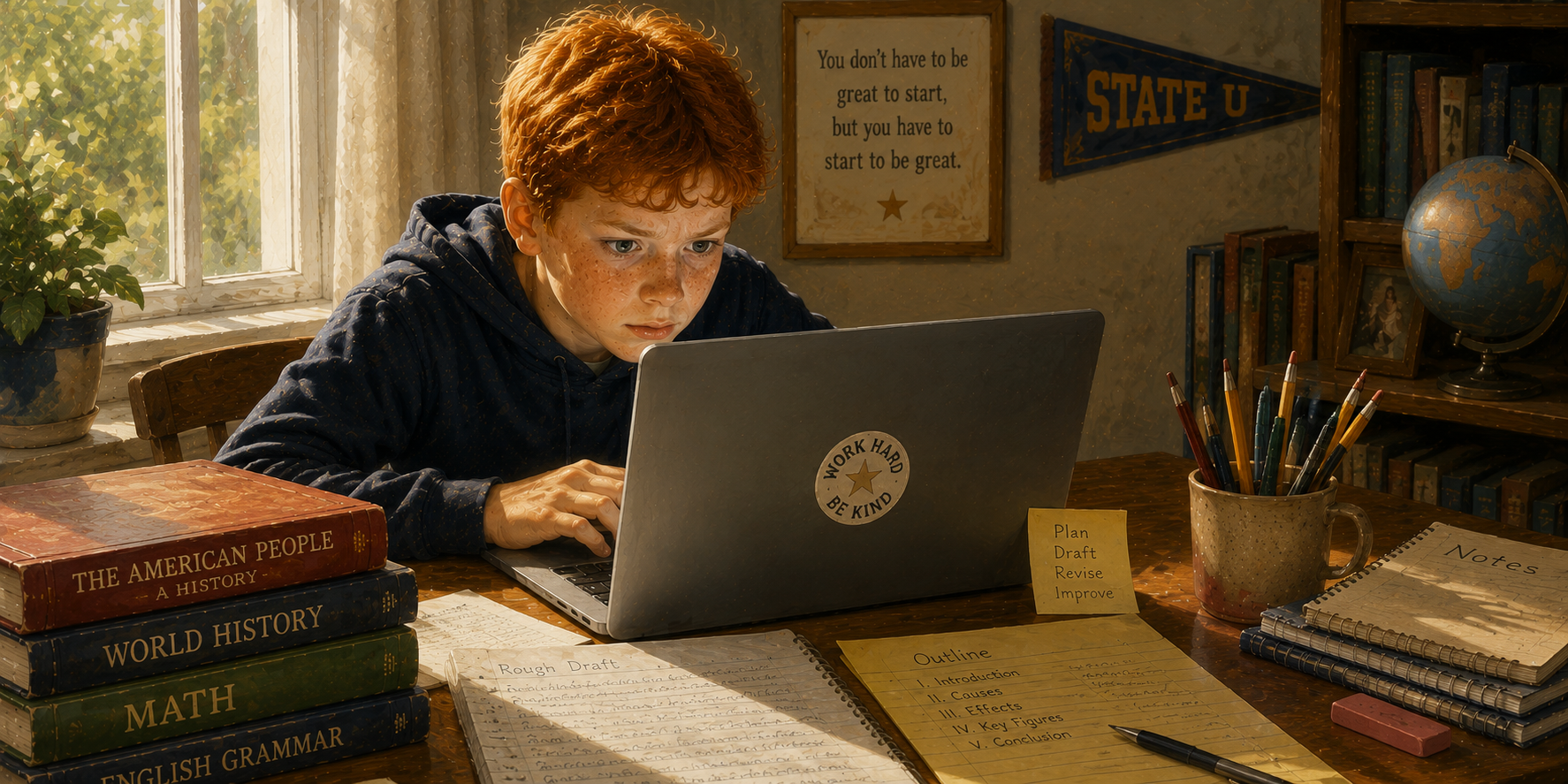
The most obvious casualty of AI-assisted cheating is actual thinking. Try asking ChatGPT to give you the pros and cons of communism. It will produce a thorough, organized list in seconds—and your child never has to wrestle with the question at all. They never have to hold competing ideas in their head, weigh them, push back on them, or arrive at their own conclusions.
There’s a proven danger to not using these thinking skills. Cognitive scientists have long established that deeper mental engagement produces stronger, more durable memories. Research by Craik and Lockhart on levels of processing shows that when students actively think through material—connecting it to what they already know, asking “why” questions, working through the implications—they absorb it in a way that passive reading never achieves. When a chatbot does the thinking, a student’s brain never does the work that makes the information stick. Cheating with AI means they can turn in the assignment, but the learning never happened.
How AI Cheating Prevents Students From Developing Writing Skills
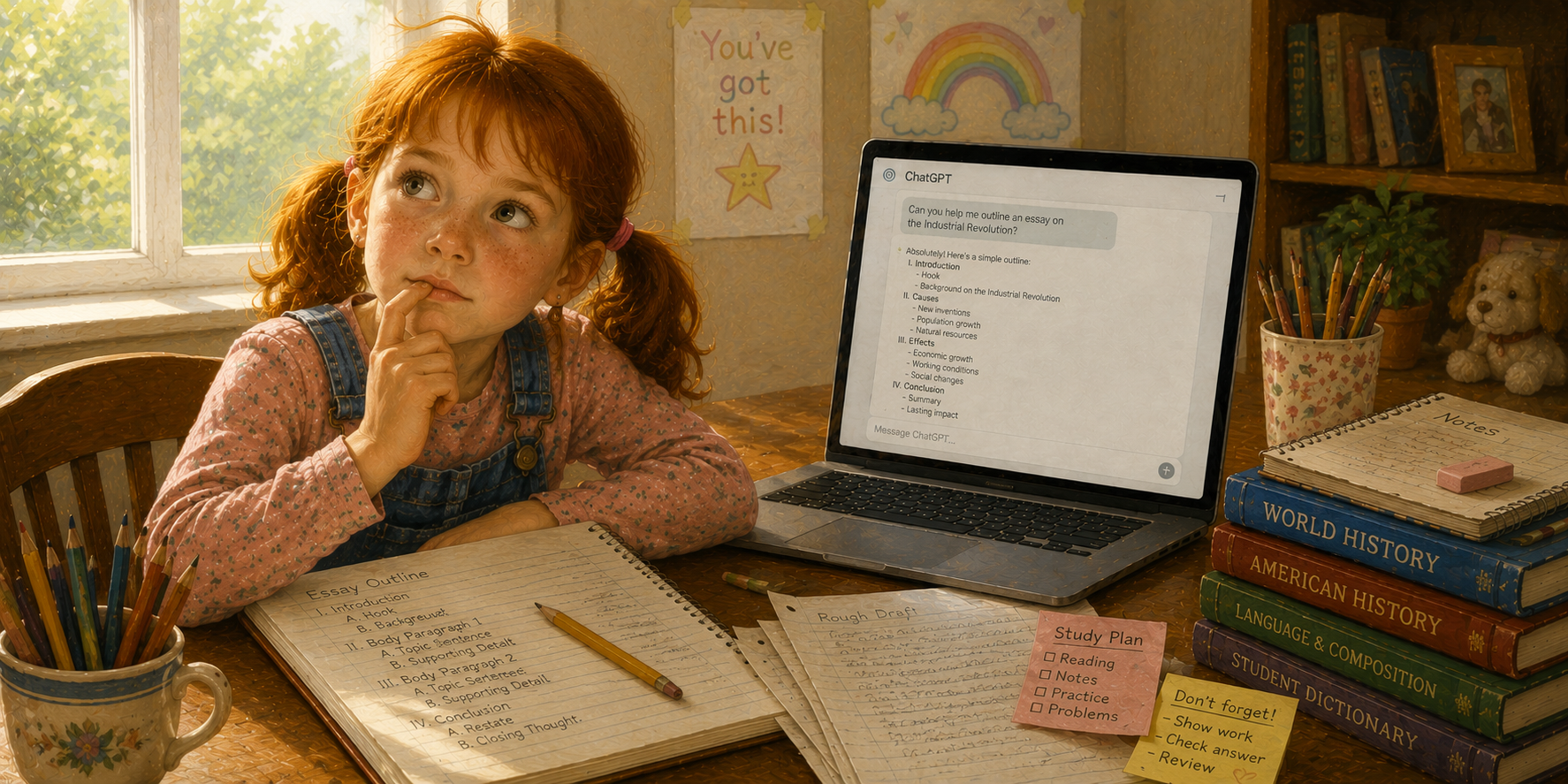
Writing is how students learn to think on paper—to organize ideas, find the right words, and push through the difficulty of saying exactly what they mean. Cheating with AI removes all of that friction, and with it, all of that growth.
There’s also a practical consequence that tends to catch up with kids eventually: AI-generated writing is recognizable. The sentence structures, the hedged language, the particular way it transitions between points—anyone who reads a lot of it begins to spot it. Teachers are spotting it. Admissions officers are spotting it. Future employers will spot it.
Picture a teenager who let AI write their high school essays, then their college papers, then their cover letters. When they finally sit down for a job interview and are asked to write a short paragraph on the spot—or when their first workplace memo gets flagged as hollow and generic—there’s no shortcut available. The skill they skipped building, due to cheating with AI, isn’t there.

How Parents Can Prevent AI Cheating
Knowing how to use AI well is a skill your child will need throughout their lives. What you want to protect is their ability to think and write for themselves — the skills that no tool can replace. Here’s how to help:
- Know their school’s AI policy. Most schools have published guidelines by now, and many parents haven’t read them. Knowing what’s permitted—and what isn’t—gives you a concrete framework for the conversation at home.
- Talk about the difference between AI as a useful tool as opposed to using it to outsource their schoolwork. Using AI to understand a concept, check a draft, or brainstorm directions is a legitimate skill. Pasting an assignment prompt into a chatbot and submitting whatever comes out is not. Make sure your child can explain the difference in their own words.
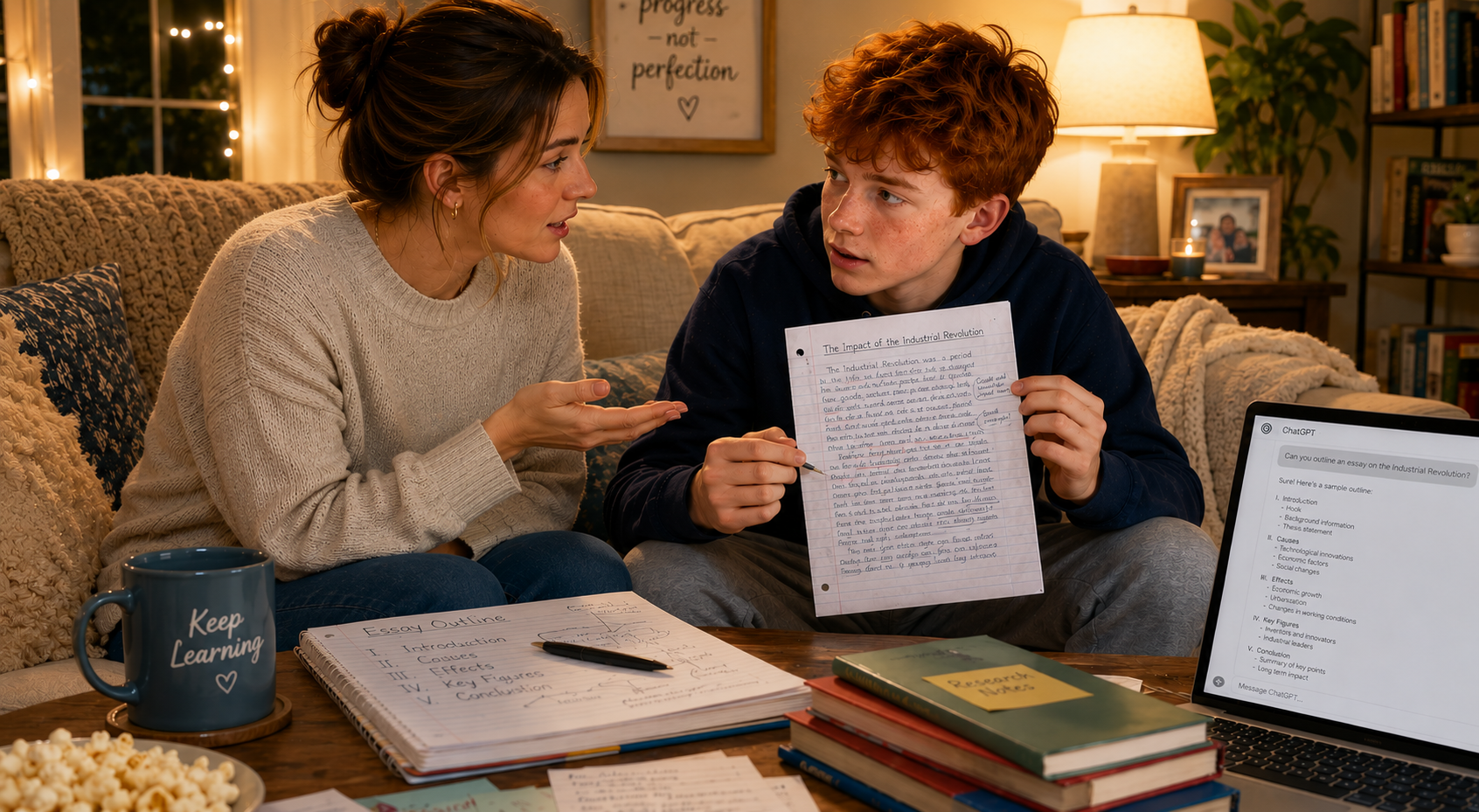
- Ask to see the process, not just the product. If your child hands in a paper, ask to see their notes, their outline, their early drafts. Real writing leaves a trail. If there’s nothing to show, that tells you something.
- Test understanding in conversation. Ask your child to explain what their paper is about—not read it to you, but tell you in their own words. A student who actually did the thinking can do this. A student who outsourced it to AI often can’t.
- Reframe what’s at stake. Don’t make it only about getting caught. Talk about what they’re actually giving up: the satisfaction of figuring something out, the writing voice they’re not developing, the ideas they’re not learning to form. The risks of getting caught are real, but the hidden cost is the growth that isn’t happening.
AI isn’t going away, and the goal was never to shield kids from it. What children need—what they’ve always needed—is to develop the capacity to think for themselves, to struggle productively with hard problems, to find their own words. Those are the things that will serve them in every job interview, every challenge, every moment when the chatbot isn’t available and they’re on their own. The shortcut looks tempting right now. But later on, they’ll realize the cost of that shortcut: the skills they were meant to be building all along.
As AI cheating becomes more common in schools, parents have an important role to play. Teaching children how to use AI responsibly while preserving their ability to think, write, and learn independently will help them succeed long after school is over.