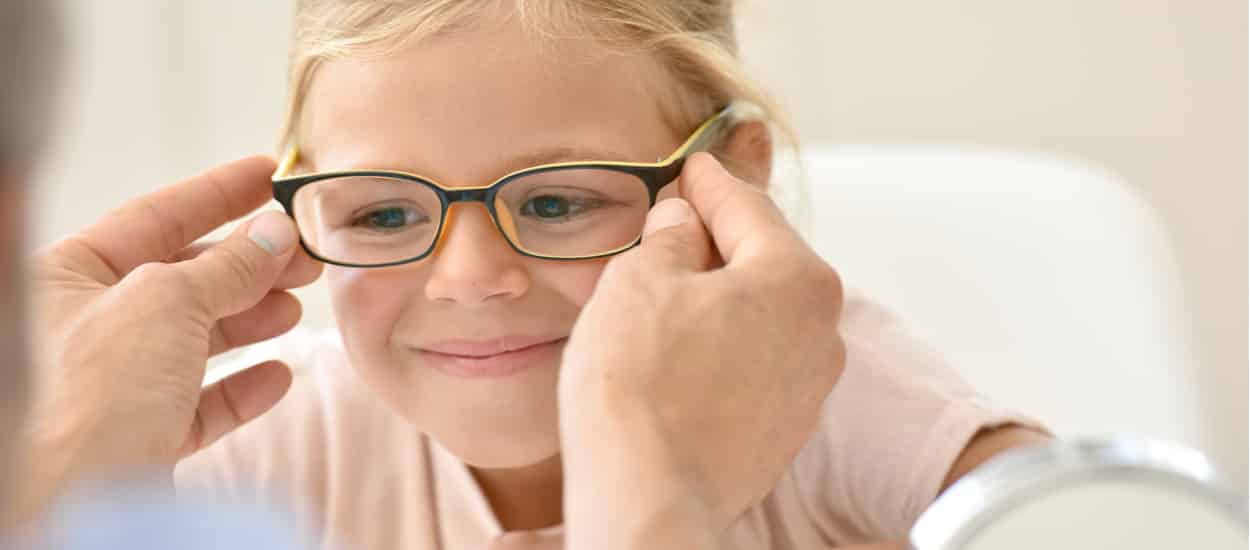
August is Children’s Eye Health and Safety Month. This is the perfect time to focus on protecting your child’s vision. Summer is still in full swing. Kids are swimming, playing sports, and enjoying outdoor adventures before school starts again. These activities are fun, but they also carry unique risks to eye health. Now is the time to schedule a vision checkup, review safety tips, and prepare your child’s eyes for the year ahead.
In the first three years of school, children are learning to read. After that, they’re reading to learn. In other words, they use their eyes for every part of their learning. That’s why they need routine checkups with an eye doctor.
Exams with an ophthalmologist or optometrist are one of the best ways to protect your child’s vision. Good vision helps support academic success. Sometimes, children are thought to have learning disabilities when the real issue is a vision problem. Untreated eye issues can damage self-esteem and make a child feel incapable, even when they’re trying hard.
Yearly exams are important. But problems can develop between appointments. Watch for the following signs and behaviors, and schedule an eye exam if you notice them.
Signs of a Vision Problem
Eye Appearance:
- Eyes not lining up properly — one eye turns in or out
- Eyelids are red, crusty, or swollen
- Eyes are red or watery
Behavior:
- Rubbing eyes oftenCovering or closing one eye
- Tilting the head to the side or pushing it forward, especially when watching TV
- Holding books too close or too far away
- Blinking often
- Becoming cranky during reading or other close work
- Squinting or frowning
- Losing interest in reading or viewing distant objects
- Eyes that wander
Your Child Says:
- “My eyes itch”
- “My eyes are burning”
- “My eyes feel scratchy”
- “I can’t see that very well”
After Close Work:
- “My head hurts”
- “I feel dizzy”
- “I feel sick to my stomach”
- “Everything’s blurry”
- “I see two of everything”
Eye Injury First Aid for Parents
Parents should know what to do in case of an eye injury:
- Scratched eye – A light corneal scratch usually heals well. A deep cut needs immediate medical attention.
- Dust or sand in eyes – Have the child blink repeatedly. If that fails, rinse with a commercial eye-wash.
- Chemical burn – Flush with running water for 15 minutes. Call the doctor right away.
- Cut eyelid – Needs stitches from an eye doctor.
- Blood in eye – Go to the emergency room.
- Black eye – Usually needs no treatment.
Preventing Eye Injuries
- Install gates at the top and bottom of staircases to protect very young children
- Use handrails on all staircases
- Lock away household products that contain dangerous chemicals
- Keep knives, kitchen utensils, and work tools out of children’s reach
- Have children wear sunglasses with impact-resistant lenses that block 100% of UV rays
- Have children wear well-fitting swimming goggles to protect against irritation and germs in the water
Sports Eye Safety
Many school and recreational sports carry a risk of eye injury. Baseball, basketball, hockey, and racquet sports are among the most common culprits. Even non-contact activities, such as track and field, can pose risks from flying debris, errant balls, or accidental contact.
The best way to prevent sports-related eye injuries is to use protective eyewear designed for the activity. Polycarbonate sports goggles are lightweight, shatter-resistant, and provide a clear view of the game. These lenses are up to ten times more impact-resistant than regular plastic lenses, making them ideal for active kids.
Coaches and parents should encourage children to wear protective eyewear during both games and practice. It’s also important to check that the goggles fit well and don’t obstruct peripheral vision.
Eye injuries in sports can range from mild scratches to severe trauma that requires surgery. Prevention is simple and effective — a good pair of sports goggles can protect your child’s vision for years to come.
Eye Tips for High School and College Students
Dry Eye from Studying and Screen Time
Exam season and long study sessions can strain eyes. Using a computer for hours reduces blinking, which dries the eyes. This can cause burning, scratchiness, or stinging. Dry eyes are also more sensitive to wind and smoke, which can trigger tearing. Over-the-counter artificial tears or lubricating drops can help.
20-20-20 Rule
Staring at one object for long periods can cause strain. Follow the 20-20-20 rule: every 20 minutes, look at something at least 20 feet away for 20 seconds. This gives eyes a break.
Prolonged Contact Lens Use
Sleeping in contact lenses or wearing them for very long study sessions reduces oxygen to the cornea. This is especially true with older hydrogel lenses. Lack of oxygen can cause blurry vision, infections, or even corneal ulcers. Teens who often fall asleep while studying should switch to glasses every few hours. Another option is silicone hydrogel lenses, which let in more oxygen and lower the risk of damage.
Key Takeaways for Parents
- Schedule yearly eye exams for your child, and watch for changes between visits.
- Protect eyes with sunglasses, swimming goggles, and safe home practices.
- Learn basic first aid for common eye injuries.
- Encourage screen breaks and the 20-20-20 rule to prevent strain.
- Limit prolonged contact lens wear to protect the cornea.
Eye Health Check-In for Parents
- Has your child had a vision check this year?
- What signs have you noticed that could point to a vision problem?
- How do you encourage your child to protect their eyes daily?
 About Varda Epstein
Varda Meyers Epstein serves as editor in chief of Kars4Kids Parenting. A native of Pittsburgh, Pennsylvania, Varda is the mother of 12 children and is also a grandmother of 12. Her work has been published in The Washington Post, The Huffington Post, The Learning Site, The eLearning Site, and Internet4Classrooms.